Stolen From Us: Missing and Murdered Indigenous People in Washington
Here in Washington, Native people go missing and get killed at rates way out of proportion to their numbers, and too many of those cases never get solved.
I sit on the crisis council for the Tulalip Tribes, and missing-person cases cross my desk more often than most people would believe. Each one is a family waiting by the phone. Each one is a community that already knows how this usually goes: a flyer, a few days of searching, then silence.
This piece is about that silence. It's about one woman from Tulalip whose name a lot of Washington now knows, and about the many others whose names it doesn't.
Mary Johnson-Davis: missing from Fire Trail Road
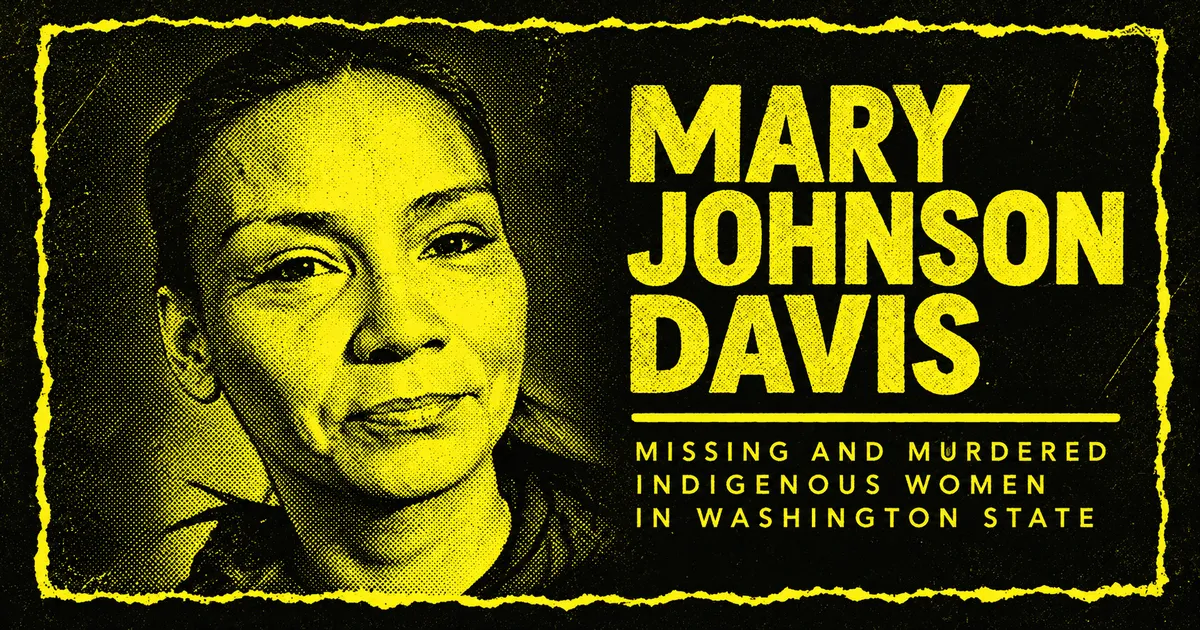
On November 25, 2020, the day before Thanksgiving, Mary Ellen Johnson-Davis was walking along Fire Trail Road on the north end of the Tulalip Reservation. She was 39 years old and a Tulalip tribal member. At 1:52 p.m. she texted a friend who was coming to pick her up: she was almost to the church. That was the last anyone heard from her.
Her phone later pinged towers around north Snohomish County. Then nothing. For almost five years her family lived with not knowing. Billboards went up. A reward was posted. Her sisters, Gerry Davis and Nona Blouin, got tired of waiting on the investigation and started digging on their own.
That search became the documentary Missing From Fire Trail Road, directed by Sabrina Van Tassel. Tulalip's own Deborah Parker was an executive producer. It premiered at the Tribeca Film Festival in June 2024 and was screened back home in Tulalip that November. The film doesn't stop at Mary. It ties her story to the bigger history, including the boarding schools that did generations of damage to Native families. You can watch it on Tubi, Amazon Prime Video and YouTube.
On June 13, 2025, the Snohomish County Sheriff's Office found human remains in a remote part of north Snohomish County. On October 31, 2025, the FBI announced a DNA match: it was Mary. The case is now a homicide investigation led by Tulalip Police with the FBI and county partners. As of the last public updates, the cause and manner of death are still undetermined and nobody has been charged.
The Tulalip Tribes and the FBI are offering a reward of up to $60,000 for information that leads to an arrest and conviction. If you know anything, contact FBI Seattle or the Tulalip Police Department.
Mary was found, but she still doesn't have justice. For her family, "found" was never supposed to look like this.
From the coast to Spokane
Mary's story isn't just a Tulalip story. The same thing happens all over the state, from the tip of the Olympic Peninsula to the Idaho line.
Bryce Herda, Neah Bay
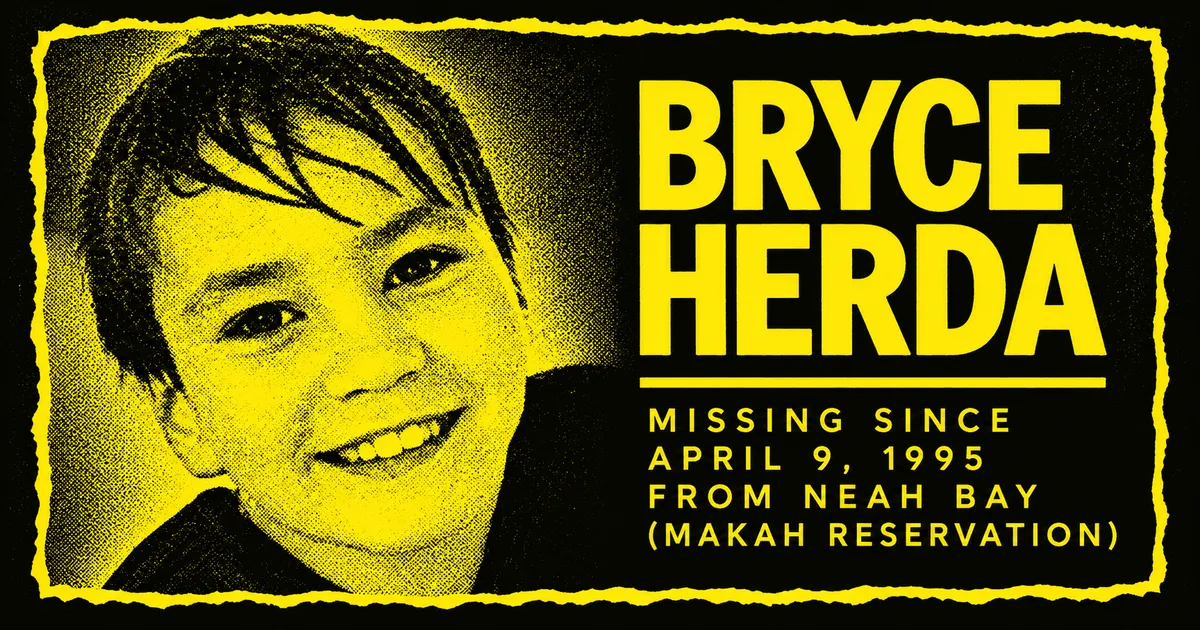
On April 9, 1995, six-year-old Bryce Herda was out with his family at Shi Shi Beach on the Makah Reservation, near Neah Bay on the far northwest tip of the Olympic Coast. The family started up the trail to leave the beach. Bryce couldn't make it up the slope, so they agreed to meet him back down on the beach. He was gone when they returned. A search started within 45 minutes, but he was never found.
Bryce would be 38 now. He's still on the State Patrol's list of missing Indigenous people, more than 30 years later. The National Center for Missing & Exploited Children has an age-progressed photo of what he might look like today. Anyone with information should call Neah Bay police at (360) 645-2701.
Neah Bay has lost others too. At a Port Angeles vigil, names were read for Makah tribal member Matt Dean, missing since January 2020, and Jimmy Jimmicum, lost at sea in April 2024.
Courtney Holden, Spokane
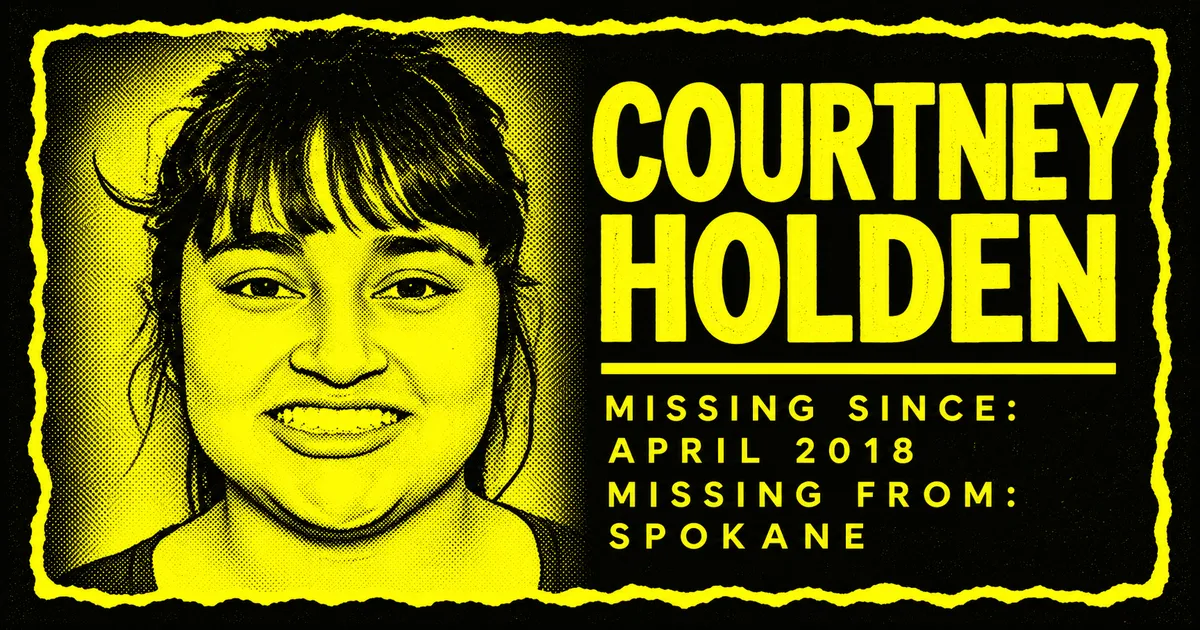
On the other side of the mountains, Courtney Holden's case shows how someone can vanish without anyone even reporting it. She was a young mom living with her adoptive family and her son in northeast Spokane. Investigators believe the last time anyone saw her in person was around April 2018. Nobody reported her missing until October 2019, when Spokane police showed up for a welfare check, more than a year after she was last seen.
Police said her family didn't fully cooperate with the search. In December 2019, her adoptive mother and brother were found in Texas and arrested on Spokane charges related to identity theft. Investigators also noted that after summer 2018 she stopped picking up a prescription she used to refill every month or two. Police fear she may be dead, but nobody has been charged in her disappearance, and she's still listed as missing.
Her case is also a perfect example of the data problem. Spokane police's original press release described Courtney as white. The State Patrol, though, lists her as a missing Native American person. If the right box doesn't get checked, a missing Native woman doesn't get counted as one.
If you know anything, call Spokane's Crime Check at 509-456-2233 and reference SPD case 2019-20191912.
The numbers in Washington
Mary's case is one of many. In 2018 the Urban Indian Health Institute, part of the Seattle Indian Health Board, looked at 71 U.S. cities. Seattle had the most cases of missing and murdered Indigenous women and girls of any city on the list, with 45. Tacoma came in seventh. Washington ranked second of all the states studied.
The State Patrol's numbers back that up. Native people make up about 2–3% of Washington's population, but they're somewhere between 6% and 7% of the missing-persons cases the patrol tracks. At any given time, more than 100 Indigenous people are on the state's missing list.
Those are just the cases that got counted. When UIHI went digging, it found 153 cases that weren't in any law enforcement records at all. Nationally, the gap is even worse. In 2016 the FBI's crime database logged 5,712 reports of missing Native women and girls, while the federal NamUs missing-persons database had only 116.
Why these cases fall through the cracks
Jurisdiction. A case that starts on a reservation can involve tribal police, the county sheriff, the state and the FBI, and each has its own rules about who handles what. Mary's case took tribal police, the FBI and the Snohomish County Sheriff's Office working together. When that teamwork doesn't happen, a case can sit in between agencies and get handled by none of them.
Bad data. Native people get logged under the wrong race all the time, or no race at all. UIHI found underreporting, racial misclassification and sloppy record-keeping. A person who doesn't show up in the data doesn't show up in the budget either.
Media attention. Some missing women lead the evening news for weeks, and most Native women barely get mentioned. Mary's family put it bluntly at a gathering in Seattle two years after she vanished: if she had white privilege, they said, they would have answers. It took a family that refused to stop, a filmmaker and a festival premiere to get her case real attention.
Trust. Generations of boarding schools, broken treaties and rough treatment from police have left a lot of Native families wary of the agencies they're supposed to call for help. That slows down reports and leaves out tips.
What Washington has done
Washington has done more on this than most states, mostly because Native families and advocates kept pushing. Mary's disappearance was part of that push. KUOW credits her case with helping drive the movement for statewide alerts.
- 2018: The legislature created two tribal liaison positions at the Washington State Patrol.
- 2019: The State Patrol started keeping a public list of missing Indigenous people.
- 2021: The state set up the Missing and Murdered Indigenous Women and People Task Force. Lawmakers extended it in 2023.
- July 2022: Washington launched the Missing Indigenous Person Alert (MIPA), the first alert of its kind in the country. It works like an Amber or Silver Alert. Lummi Nation police sent out the very first one.
- Since then: The state added a cold case unit for Indigenous missing-person and homicide cases. Its first conviction came in the 2016 killing of George David, a respected master woodcarver who lived in Neah Bay. He was found dead in a Port Angeles apartment, and a woman pleaded guilty to his murder.
The alerts are making a difference. By June 2024 the patrol had issued 105 MIPA alerts. Eighty-nine of those people were found alive, five were found dead, and 11 were still missing.
The alert system didn't exist yet when Mary vanished in 2020, and her family had to make noise on their own. An alert going out on day one won't fix everything, but it beats a flyer and silence.
What you can do
- Report fast. Neither Washington nor federal law makes you wait to report someone missing. Call 911 right away.
- Share the alerts. The State Patrol posts MIPA alerts and keeps the list of missing Indigenous people on its website. In the system's first months, three people were found because someone in the public saw an alert.
- Say their names. Write about these cases, share them and ask about them. Coverage is pressure, and pressure moves cases.
- Speak up if you know something. Up to $60,000 is on the table for information in Mary's case. Contact FBI Seattle or Tulalip Police. For Bryce, call Neah Bay police. For Courtney, call Spokane's Crime Check.
- Back the people doing the work. Support Native-led groups like the Urban Indian Health Institute, tribal advocates and families running their own searches.
Mary Johnson-Davis was a sister, a daughter and a member of this community. She went for a walk on a road she knew and never came home. Her family deserves answers, and so does every family still waiting.
Sources
- Human remains found in Snohomish County identified as missing Tulalip woman (The Herald)
- Film shines light on missing Tulalip woman's story (The Herald)
- 'Missing from Fire Trail Road' premieres in Tulalip (The Herald)
- FBI offers $10,000 reward for info on missing Tulalip woman (The Herald)
- Human remains identified as missing Tulalip woman Mary Johnson-Davis (Lynnwood Times)
- Human remains identified as a missing Tulalip woman whose disappearance helped spark movement (KUOW)
- Remains of Indigenous woman found; $60,000 reward offered (CBS News)
- UIHI issues a report on MMIWG (Puyallup Tribal News)
- 2 years in, Washington's alert system for missing Indigenous people is working (OPB/KUOW)
- WA officials, feds to discuss MMIP crisis (FOX 13)
- Upgrades to Washington state's alert system (Spokesman-Review)
- Washington State Patrol: missing persons alerts
- Missing woman's family: 'If she had white privilege we would have answers' (The Herald)
- Bryce Herda missing person poster (Washington State Patrol)
- Bryce Florian Herda (NCMEC)
- Bryce Florian Herda (Charley Project)
- Remembering missing and murdered Indigenous people (Peninsula Daily News)
- Indigenous cold case unit secures first conviction (CBS News)
- Major Crimes Unit needs help locating missing woman (Spokane Police)
- Warning signs were there for Spokane woman missing (Spokesman-Review)
- Washington State Patrol public MIP list, Oct. 2025