
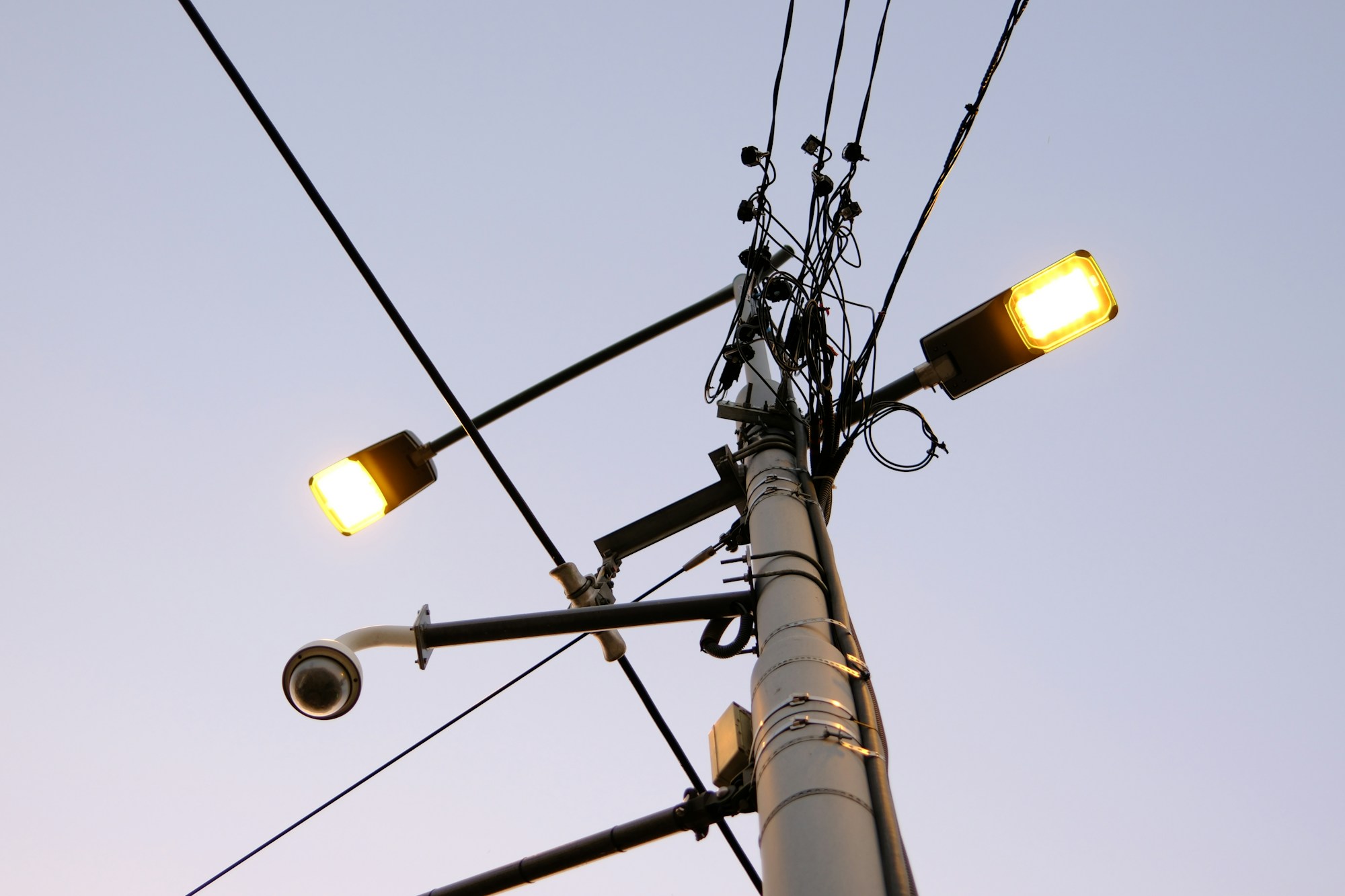
On Tuesday, November 10, Seattle Mayor Katie Wilson stood up and announced that the police camera network she campaigned against is going to grow. New cameras are coming to the Stadium District, to the Capitol Hill nightlife district, and to the blocks around Garfield High School in the Central District. The Stadium District cameras went live right away. The others still have to be bought and installed, and the city says that will happen “in the coming months.”
In the same breath, the mayor admitted that the evidence on whether these cameras actually reduce crime is “mixed,” and said she doesn’t want to oversell them. Her main reason for moving ahead isn’t proof that they work. It’s that the Seattle Police Department is short on officers.
That should worry anyone who cares about this city.
Why I care
I spend a significant part of every week in Seattle. These are streets I walk. I also serve on a crisis council for the Tulalip Tribes, a short drive north of the city near Marysville, and missing-person cases are a regular part of that work. So I’m not going to pretend cameras can never help. When someone is missing, every lead matters, and I know that better than most.
But I also know what happens when communities that have been over-policed and under-protected are asked to just trust the system. Trust has to be earned, and it has to be written down. That’s exactly what’s missing here.
How we got here
Seattle’s camera program started under Mayor Bruce Harrell. In April 2025, police began feeding live video from roughly 62 cameras in Chinatown-International District, Downtown and along Aurora into a new Real-Time Crime Center, a room where analysts watch and search camera feeds as crimes unfold. In September 2025, the City Council voted to expand it to the three areas now on the table.
Wilson ran against that expansion. Once in office, she paused it on March 19, 2026, while leaving the existing cameras on, and put the Garfield and Capitol Hill cameras on hold. Then came the World Cup. The Stadium District cameras she had said would stay dark were switched on for the tournament in June, and switched off again on July 7. Last week, an outside audit she ordered landed on her desk. One day later, the expansion was back.
What her own audit found
The mayor hired NYU Law’s Policing Project to review the program for civil rights and civil liberties risks. The headline for City Hall was reassuring: Seattle’s use of the cameras is “relatively modest,” and SPD bans facial recognition.
Read past the headline and the picture changes. The auditors found that many of the protections Seattle points to are informal practice, not written policy, and some are unclear or hard to enforce. SPD keeps footage for five days, but only as a habit. The law allows 30. The crime center can now tap into 538 cameras, including city traffic cameras and private cameras, in ways existing policy never anticipated. The software can already search footage for clothing and vehicle colors. And the auditors warned that systems like this are “designed for expansion.”
They made 19 recommendations, including limits on tracking a person from camera to camera without a warrant, rules for protests, limits on data sharing, and a public map of where the cameras are. They also said, pointedly, that whether Seattle should have this system at all is a question for the people of Seattle and their elected officials.

Switch on now, write the rules later
The mayor’s answer to an audit that said “write it down” was to turn the cameras on first. Her plan promises a public dashboard, tighter access rules, policies for protests and big events, an advisory group, and Inspector General spot checks starting in 2027. Most of it comes with no deadline beyond “the coming months.”
Here’s what it doesn’t include. There is no specific limit on how long footage is kept. There is no written commitment about federal agencies getting access to the video. There is no warrant requirement.
That last gap matters most. Wilson ran as a mayor who would stand up to federal overreach. The Communities Not Cameras coalition put it plainly after the announcement: “The Mayor ran on a platform to Trump-proof Seattle and she vowed to defend the City’s status as a sanctuary city.” The coalition points to the audit’s own warning that once footage exists, nobody can promise it will never be shared, including with the federal government.
Washington State has already shown what real rules look like. This spring, the Legislature passed a law on automated license plate readers after University of Washington researchers found local police had let Border Patrol into their plate data. Governor Bob Ferguson signed it on March 30. It requires deleting data after 21 days, bans using it for immigration enforcement, and blocks collection near health care and immigration facilities, schools, courts, food banks and places of worship. If Olympia could write hard limits into law for plate readers, Seattle can write them for its cameras before it adds more.
The ACLU of Washington has been warning about this program from the start. When Harrell launched it, Tee Sannon, who leads the group’s technology policy work, called it “a vast and concerning expansion of government surveillance” that “provides a false sense of security at the cost of privacy and race equity.” Nothing in last week’s announcement answers that.
Even on the City Council, the doubts are out loud. Councilmember Alexis Mercedes Rinck said she “would prefer that we’d address these in-house issues before seeking to expand this system.” She’s right.
Fewer checks, more cameras
The timing makes this worse. In September 2025, a federal judge ended the consent decree that put SPD under court oversight for 13 years, a decree that began after the Justice Department found a pattern of excessive force. The outside referee is gone.
The tools that are supposed to replace it are weak. In December 2025, weeks before Wilson took office, the Council approved a new police union contract by a 6 to 3 vote. It raised starting pay to $118,000 but made only small gains on accountability. Civilian investigators can assist on serious misconduct cases but can’t lead them, and some lesser misconduct now stays inside SPD. The contract also boxes in the city’s civilian crisis responders. In August, the Inspector General found it keeps police as the default response to mental health crises. That contract runs through 2027.
The department itself is in flux. After the mass shooting at the Bite of Seattle on July 26 left three people dead, Chief Shon Barnes resigned at the mayor’s request. An interim chief, Andre Sayles, runs SPD while the city searches for a permanent one. Meanwhile, the mayor’s budget would give SPD more than $550 million, including $58 million to hire 66 officers, while holding 14 unarmed crisis responder jobs vacant.
Each of these decisions has its own explanation. Put them together and they point in one direction: more police, more cameras, fewer civilian responders and weaker outside oversight.

The other side
The case for the cameras isn’t nothing. SPD really is short-staffed, and a crime center can help a thin force respond faster. The audit describes analysts updating a suspect’s description for officers in real time. After the Bite of Seattle shooting and violence on Capitol Hill, people want to see the city act. The Greater Seattle Business Association, which represents LGBTQ businesses, backed the Capitol Hill cameras while admitting that police surveillance has harmed LGBTQ people in the past. And the cameras cover public spaces, record no audio, and don’t use facial recognition.
But an anecdote isn’t evidence. The city’s own study of whether the cameras help solve cases, commissioned by the Inspector General from the University of Pennsylvania, isn’t due until 2027. Protections that live in habit can disappear with the next chief or the next mayor. And “we’re short on officers” is an argument about efficiency, not about rights.
What Seattle should do
The Garfield and Capitol Hill cameras aren’t up yet. That means there’s still time. Before a single new camera goes live, the city should:
- Write the five-day retention limit and the facial recognition ban into policy or law.
- Put a hard rule on federal access in writing, modeled on the state plate reader law: no use for immigration enforcement and no sharing outside court proceedings.
- Require a warrant to follow a person from camera to camera.
- Publish the dashboard and the camera map.
- Hold off on any further expansion until the University of Pennsylvania study is out.
Mayor Wilson asked for an honest audit and got one. Now she should act on it in the right order. Rules first, then cameras. Seattle elected her to protect people from exactly this kind of overreach, and it’s not too late to keep that promise.
Sources
- KUOW, November 10, 2026
- KUOW, November 9, 2026, on the NYU audit
- City of Seattle announcement
- KIRO 7, November 10, 2026
- FOX 13, November 2026
- KUOW, July 7, 2026
- ACLU of Washington
- OPB, March 31, 2026
- U.S. Department of Justice, September 3, 2025
- The Urbanist, December 11, 2025
- KUOW, August 20, 2026
- KOMO, July 30, 2026
- KUOW, September 22, 2026
Leave a Reply